


Document Actions


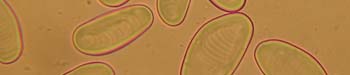
A new sedimentary microfossil type: Squamous epithelium, discovered at the archaeological sites of Carpenters Gap 3, in the Kimberley, Western Australia and Pangpang, on Efate Island in Vanuatu
Horrocks M, Bedford S, O’Connor S. 2026. Journal of Pacific Archaeology, 16(1): Article 6:1-11.
Abstract
During recent microfossil analyses of sedimentary deposits from two archaeological sites in Oceania, Carpenters Gap 3 in Western Australia (a rockshelter with a c. 30,000 yr BP record of human occupation) and Pangpang in Vanuatu (an open site assumed of immediately post-Lapita age, c. 2800 yr BP), an unusual type of microfossil was discovered. This comprised layered sheets of epithelial tissue, which had the morphological features of stratified squamous epithelium, a type of animal epidermal tissue. It is a fundamental tissue type found across most multicellular animal groups, especially mammals, adapted for rapid diffusion or protection from abrasion.The squamous epithelium described here represents a new type of sedimentary microfossil. In environmental history contexts, at the very least this microfossil can provide an additional or alternative line of evidence of former animal (roosting/sleeping/nesting or hunted and butchered) and human presence, being especially useful if no animal macrofossils are preserved. In addition, although DNA is not located in the cell membrane, if nuclei are preserved within cells in recovered epithelium (uncertain in this case), ancient DNA analysis can be carried out to potentially provide high resolution taxonomic resolution.


