


Document Actions


Archaeological
Revealing past land use practices, including the identification of specific agricultural crops.
The following abstracts relate to the use of microfossil (and other botanical) research in archaeology:
- Exploratory pollen and starch analysis at the Cloudman site, Michigan shows evidence for maize (Zea mays) cultivation and wild rice (Zizania palustris) gathering from Early Late-Woodland to historic times
- A new sedimentary microfossil type: Squamous epithelium, discovered at the archaeological sites of Carpenters Gap 3, in the Kimberley, Western Australia and Pangpang, on Efate Island in Vanuatu
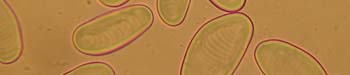
- Helminth egg discoveries at the Letchworth archaeological site, Florida, USA, show evidence for animal resource use during c. 400 BC-AD 800
- The Mangareva terrestrial niche over time: Evidence from plants, landsnails, birds, and commensal animals
- New microfossil discoveries at Carpenters Gap 1 and 3 archaeological sites, Kimberley, Australia reveal exploratory records of helminth parasite eggs since c. 30,000 yr BP
- Microfossil analysis of sediments from Carpenters Gap 1 and 3 archaeological sites, Kimberley, Western Australia, provides evidence for processing cf. Dioscorea transversa and cf. Colocasia esculenta since c. 30,000-25,000 cal BP
- New helminth egg discoveries at the Cloudman archaeological site, Michigan, North America show evidence for parasites from Early Late Woodland (AD 500/600-1000) to Historic times
- Records of helminth parasites at archaeological sites in the New Guinea Highlands, from c. 18,000 yr BP, suggest Late Holocene presence of dogs and pigs
- Plant microfossils reveal human activity in and around Hawaiian Island fishponds, including introduced Polynesian and European multi-cropping
- Palaeoecological studies at four archaeological sites in the New Guinea Highlands document local vegetation histories and plant use from c. 18,000 cal BP to the recent past
- Tracing the history of Māori horticulture and dogs (Canis familiaris) at two volcanic cone maunga pā, Auckland, New Zealand using microfossil and 14C analyses
- Microfossil starch provides the first evidence for introduced taro (Colocasia esculenta) on the Marshall Islands, Micronesia, commencing c. 1800 cal. BP
- Updated microfossil and 14C analyses of Ifugao Rice Terraces, Philippine Cordilleras, reveal early taro and rice cultivation, and new parasite discoveries
- A new parasite discovery in Micronesia: Eggs of the nematode Toxocara canis at archaeological sites on Ebon Atoll, Marshall Islands extend the known dog presence by c. 600 years
- New dog parasite (Toxocara canis) discoveries at Melanesian and Polynesian sites in tropical Remote Oceania
- Plant microfossils and parasites from Palliser Bay stone garden systems, New Zealand, reveal Māori translocations and helminthiasis
- Introduced Māori cultigens and intestinal parasites found in microfossil records from Taranaki, New Zealand
- A new discovery from Māori archaeological sites on Coromandel Peninsula, New Zealand, reveals a widely distributed, commensal dog parasite
- Pre-contact vegetation and persistence of Polynesian Cultigens in Hālawa Valley, Moloka‘i
- Archaeology and the emergence of customary resource management in southern Vanuatu
- Plant microfossil and 14C analysis of archaeological features at Coromandel Peninsula, New Zealand: Evidence for regional Māori use of introduced and indigenous plants
- New discoveries from the early Māori village at Shag River Mouth, New Zealand, reveal intestinal parasites
- New microfossil approaches and multi-proxy analysis reveal precontact Polynesian plant translocations and use, Marquesas Islands
- A plant and parasite record of a midden on Auckland Isthmus, New Zealand, reveals large scale landscape disturbance, Māori introduced cultigens, and helminthiasis
- Palaeoparasitology confirms Early Lapita evidence of pig and dog at Kamgot, Bismarck Archipelago
- Pollen and phytoliths in archaeological features from North Island, New Zealand, reveal landscape disturbance and cultivation of Polynesian introduced Cordyline cf. fruticosa (ti)
- A ceramic and plant and parasite microfossil record from Andarayan, Cagayan Valley, Philippines, spanning the last ca. 2080 years reveals cultigens and human helminthiases
- Botanical remains of the last 1800 years from Tarawa, Republic of Kiribati, reveal ancient aroid (Cyrtosperma merkusii and Colocasia esculenta) pit cultivation and other cultigens
- Earliest evidence for pit cultivation provides insight on the nature of first Polynesian settlement
- Archaeological roots of traditional land use and resistance to Spanish colonial entanglement on Guam
- Recovering plant microfossils from archaeological and other paleoenvironmental deposits: A practical guide developed from Pacific Region experience
- Environmental history of an early Spanish settlement in the Parian District of Cebu City
- Sustenance and sustainability: Food remains and contact sites in Vanuatu
- New excavations in Easter Island’s statue quarry: Soil fertility, site formation and chronology
- Early Lapita subsistence: Evidence from Kamgot, Anir Islands, New Ireland Province, Papua New Guinea
- Plant microfossil results from Old Kiyyangan Village: Looking for the introduction and expansion of wet-field rice (Oryza sativa) cultivation in the Ifugao Rice Terraces, Philippine Cordilleras
- Archaeological and sedimentological data indicate Lapita settlement on a newly formed coastal plain: Tavua Island, Mamanuca Group, Fiji
- Archaeobotanical assemblages from Tangatatau Rockshelter
- Evaluating agricultural bet-hedging strategies in the Kona Field System: New high-precision 230Th/U and 14C dates and plant microfossil data from Kealakekua, Hawai‘i Island
- Pollen, phytolith and starch analyses of dryland soils from Easter Island show widespread vegetation clearance and Polynesian-introduced crops
- Lack of suitable coastal plains likely influenced Lapita (~2800 cal BP) settlement of Samoa: Evidence from south-eastern Upolu
- A plant microfossil record of late Quaternary environments and human activity from Rano Aroi and surroundings, Easter Island
- Pollen, starch and biosilicate analysis of archaeological deposits on Guam and Saipan, Mariana Islands, Northwest Pacific: Evidence for Chamorro subsistence crops and marine resources
- Human ecodynamics in the Mangareva Islands: A stratified sequence from Nenega-Iti Rockshelter (Site AGA-3, Agakauitai Island
- Microfossil and Fourier Transform InfraRed analyses of Lapita and post-Lapita human dental calculus from Vanuatu, Southwest Pacific
- Erratum to: Agriculture, domestic production, and site function: Microfossil analyses and late prehistoric landscapes of the Society Islands
- Agriculture, domestic production, and site function: Micro-fossil analyses and late prehistoric landscapes of the Society Islands
- Pollen, phytoliths, arthropods and high-resolution 14C sampling from Rano Kau, Easter Island: Evidence for late Quaternary environments, ant (Formicidae) distributions and human activity
- Ancient gardening in the Kona Field System, Island of Hawaii, US
- Macroremains of plants
- Phytoliths
- L'evolution botanique de l'Ile de Paques
- Fossil plant remains at Rano Raraku, Easter Island’s statue quarry: Evidence for past elevated lake level and ancient Polynesian agriculture
- Microfossils of Polynesian cultigens in lake sediment cores from Rano Kau, Easter Island
- New pollen, sedimentary, and radiocarbon records from the Marquesas Islands, East Polynesia: Implications for archaeological and palaeoclimate studies
- The Mk II sampler: A device to collect sediment cores for analysis of uncontaminated DNA
- Stratigraphic and plant microfossil investigation at Cook’s Cove, North Island, New Zealand: reinterpretation of Holocene deposits and evidence of Polynesian introduced crops
- Introduced Dioscorea spp. starch in Lapita and later deposits, Vao Island, Vanuatu
- Plant microfossil analysis of deposits from Te Niu, Rapa Nui, demonstrates forest disruption c. AD 1300 and subsequent dryland multi-cropping
- Archaeobotany in Australia and New Guinea: Practice, potential and prospects
- A short note on banana (Musa) phytoliths in Lapita, immediately post-Lapita and modern period archaeological deposits from Vanuatu
- Localised human impacts on the Harataonga coastal landscape, Great Barrier Island, northern New Zealand
- Sweet potato (Ipomoea batatas) and banana (Musa sp.) microfossils in deposits from the Kona Field System, Island of Hawaii
- Plant microfossils in prehistoric archaeological deposits from Yuku rock shelter, Western Highlands, Papua New Guinea
- Introduced taro (Colocasia esculenta) and yams (Dioscorea spp.) in Podtanean (2700-1800 yr BP) deposits from Mé Auré Cave (WMD007), Moindou, New Caledonia
- Field survey, sedimentology and plant microfossil analysis of sediment cores from possible cultivation sites at Tolaga Bay, eastern North Island, New Zealand
- Sediment, soil and plant microfossil analysis of Maori gardens at Anaura Bay, eastern North Island, New Zealand: comparison with descriptions made in 1769 by Captain Cook’s expedition
- Plant microfossil analysis reveals disturbed forest and a mixed-crop, dryland production system at Te Niu, Easter Island
- A short note on starch and xylem of Ipomoea batatas (sweet potato) in archaeological deposits from northern New Zealand
- Evidence for introduced taro (Colocasia esculenta) and lesser yam (Dioscorea esculenta) in Lapita-era (c. 3050-2500 cal. yr BP) deposits from Bourewa, southwest Viti Levu Island, Fiji
- Starch residues in a sediment core and earth oven
- Starch residues in coprolites
- Plant microfossil analysis of soils from Polynesian stonefields in South Auckland, New Zealand
- Late Quaternary environments, vegetation and agriculture in northern New Zealand
- Analysis of plant microfossils in archaeological deposits from two remote archipelagos: the Marshall Islands, eastern Micronesia, and the Pitcairn Group, southeast Polynesia
- A short note on starch and xylem of Colocasia esculenta (taro) in archaeological deposits from Pitcairn Island, southeast Polynesia
- The Hamurana Road site, U15/9, Rotorua
- A combined procedure for recovering phytoliths and starch residues from soils, sedimentary deposits and similar materials
- Microfossils of introduced cultigens from an early wetland ditch in New Zealand
- Microfossil analysis of Lapita deposits in Vanuatu reveals introduced Araceae (aroids)
- Polynesian plant subsistence in prehistoric New Zealand: a summary of the microfossil evidence
- Analysis of plant microfossils in early European latrine fills from Russell, northern New Zealand
- Starch grains and xylem cells of sweet potato (Ipomoea batatas) and bracken (Pteridium esculentum) in archaeological deposits from northern North Island, New Zealand
- Microbotanical remains reveal Polynesian agriculture and mixed cropping in early New Zealand
- Evidence for diet, parasites, pollen, phytoliths, diatoms and starch grains in prehistoric coprolites from Kohika
- Analysis of sediments and plant remains from the find-spot of a cache of Polynesian gardening tools at Ruakaka, northern New Zealand
- Pollen, phytoliths and diatoms in prehistoric coprolites from Kohika, Bay of Plenty, New Zealand
- Analysis of plant microfossils in prehistoric coprolites from Harataonga Bay, Great Barrier Island, New Zealand
- Wetland microfossils in soil: implications for the study of land use on archaeological landscapes
- Gourds, truffles and coprolites
- Pollen and phytoliths in stone mounds at Pouerua, Northland, New Zealand: implications for the study of Polynesian farming


